Cloud architecture, migration and cost optimisation
A setup sized to your real traffic, migrations from other hosts in planned stages, and reviews that remove unused resources and right-size the rest.

Cloud infrastructure on AWS, GCP and Azure defined as code, with automated delivery, observability and incident response that keep production stable and costs predictable.
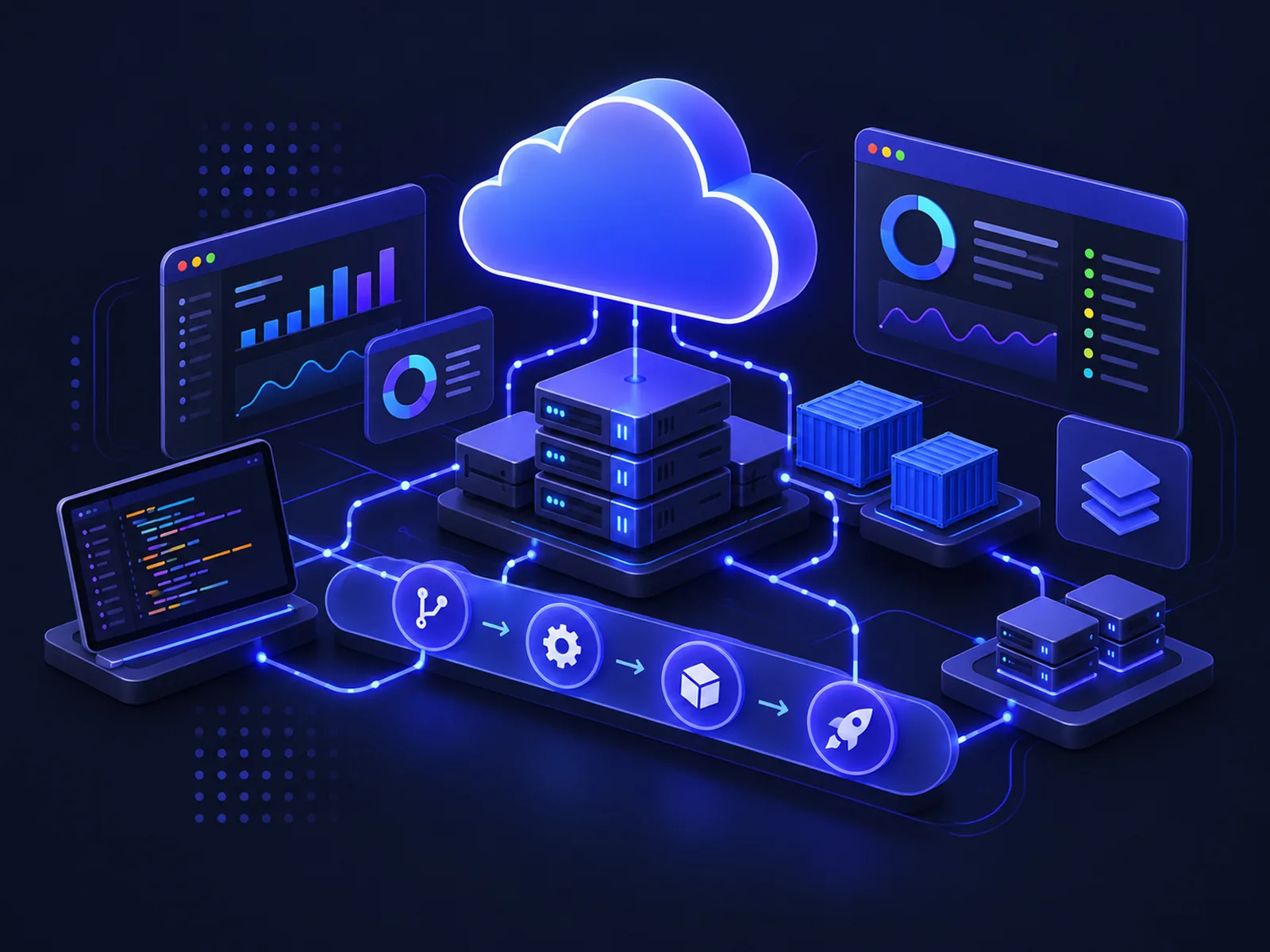
Infrastructure problems tend to show up at the worst time: a failed deployment on launch day, a database that runs out of space, or a cloud bill that doubles without warning. Most of these can be prevented with a sound setup, automation and monitoring that alerts someone before customers notice.
We design and manage infrastructure on AWS, Google Cloud and Azure, defined as code so every environment can be recreated and every change reviewed. Deployments run through automated pipelines with tests, so releasing a fix is routine rather than risky.
Whether you are launching a new product, moving off a platform you have outgrown or bringing an existing setup under control, we start by understanding your traffic, budget and risk, then size the setup to match. You keep ownership of every account and every line of configuration.
A setup sized to your real traffic, migrations from other hosts in planned stages, and reviews that remove unused resources and right-size the rest.
Servers, databases, networks and permissions defined in code with AWS CDK or similar tools, so environments are reproducible and changes are reviewed.
GitHub Actions pipelines that test, build and deploy every change, with preview environments and one-step rollbacks.
Docker images for consistent environments, and Kubernetes or managed container services when scale and team size call for it.
Error tracking, logs, metrics and uptime checks with alerts that go to the right person, plus written steps for common incidents.
Automated backups that are tested by restoring them, recovery plans, and a setup built toward a 99.9% uptime target.
We review your current setup, costs, risks and release process, and agree priorities.
A written design for environments, networking, security and deployment, with a migration plan if needed.
Infrastructure as code, pipelines and monitoring put in place, with migrations done in stages to avoid downtime.
Ongoing monitoring, updates and cost reviews on a maintenance plan, or a clean handover to your team.
Every project starts with a free discovery call and a written estimate split into milestones. Choose the model that fits:
What clients usually ask before starting a cloud and devops project with us.
Another question? Email info@mercurysols.org.
AWS covers the widest range of needs, Google Cloud suits data and AI-heavy products, and Azure fits companies already on Microsoft. For many web apps, Vercel or a managed platform is simpler. We recommend based on your stack, team and budget.
Usually, yes. Common savings come from removing unused resources, right-sizing servers and databases, and using reserved or spot capacity where it is safe. We review the bill before suggesting changes.
Yes. We plan the move in stages, run the old and new setups side by side where needed, and switch over with a tested rollback plan.
Hosting and other provider fees are billed to your own accounts, so you keep control and full visibility. We estimate the monthly cost before you commit.
Yes. We offer 24/7 monitoring, updates and incident response on a maintenance plan, or hand over documentation and runbooks so your team can run it.
Tell us what you want to build. New builds, ongoing work or maintenance, on fixed-price, hourly or dedicated-team terms. We reply within 1 business day.