AI agents and multi-agent orchestration
Agents that plan, call tools and hand work to each other, with validated state between steps and clear points where a person reviews the result.

Applied AI that holds up in production: multi-agent systems that complete work end to end, LLM copilots and RAG assistants grounded in your own data, voice, vision and simulation, all shipped with evaluations, guardrails and cost controls.
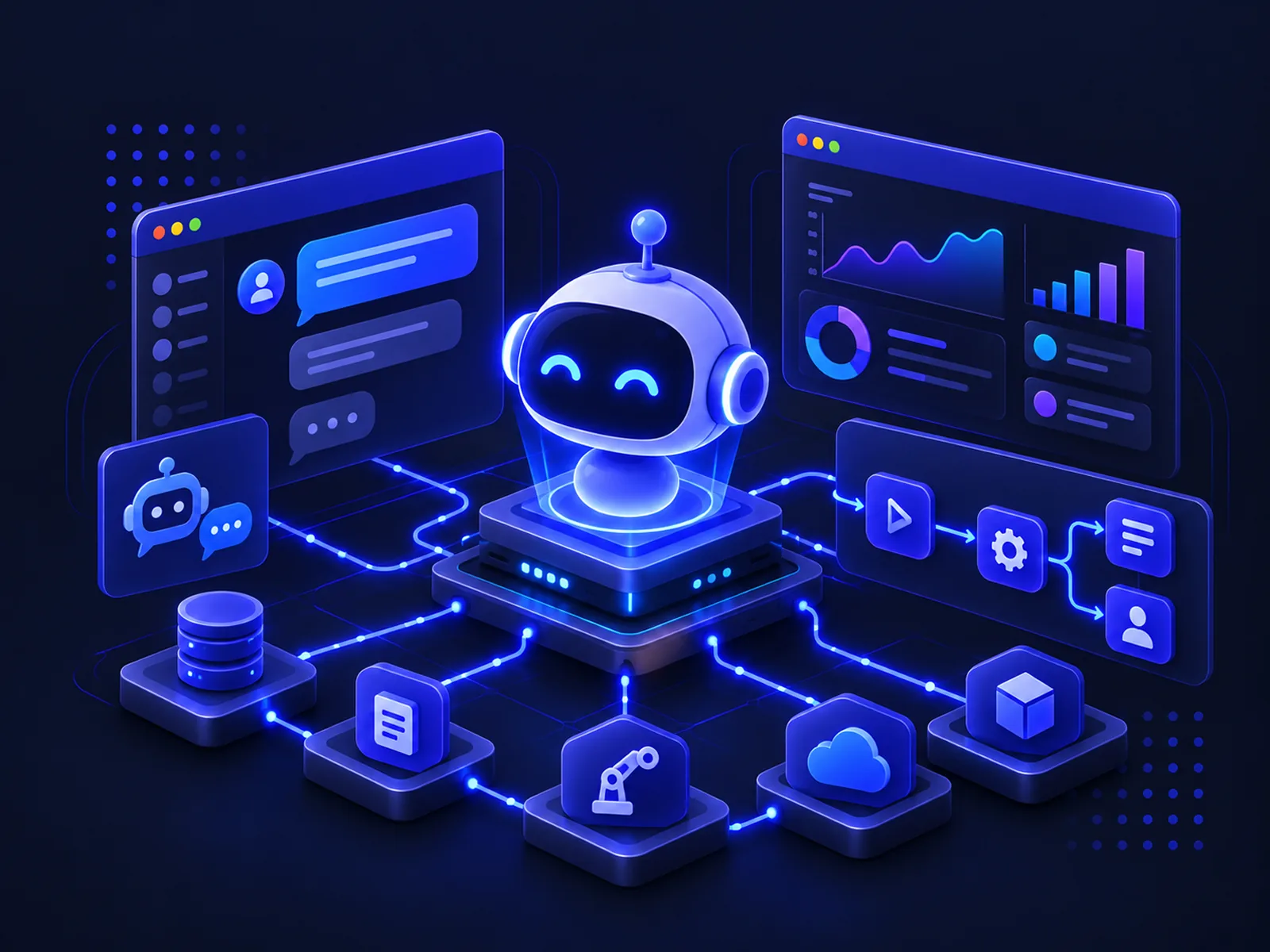
Getting a demo working with a large language model takes an afternoon. Getting it to give correct answers every day, stay within budget, and fit into the systems your team already uses is the real work. That is the part we focus on.
We build AI agents that complete multi-step tasks, assistants grounded in your own documents and data, and automations that connect models to your CRM, inbox, database or internal tools. We work across OpenAI, Anthropic, Google Gemini and open models, and choose based on accuracy, cost and where your data is allowed to go.
Every AI system we ship comes with evaluations that measure answer quality, guardrails for what the model may and may not do, human approval steps where mistakes would be costly, and cost controls such as model routing and caching.
Agents that plan, call tools and hand work to each other, with validated state between steps and clear points where a person reviews the result.
Assistants inside your product or for your support team, with the right tone, access controls and a fallback to a human when the model is not sure.
Search and answers over your documents, knowledge base and databases, with sources shown so users can check where an answer came from.
Models that simulate how people, markets or systems respond to change, for planning and risk analysis.
Speech-to-text, voice assistants and call summaries, tuned for accents, background noise and domain vocabulary.
Reading invoices, forms, IDs and images, extracting structured data and routing it into your systems.
Test sets that measure quality before and after every change, fine-tuning when prompting is not enough, and rules that block unsafe or off-topic output.
Connecting models to email, CRMs, spreadsheets and internal APIs so routine work runs without copy and paste.
We define what a good answer looks like, check the data available, and flag privacy or compliance limits early.
A working prototype on real examples, measured against a test set so quality is a number, not a feeling.
Guardrails, human review steps, logging, cost controls and integration with your systems.
We track quality and cost in production and adjust prompts, models or retrieval as usage grows.
Every project starts with a free discovery call and a written estimate split into milestones. Choose the model that fits:
Health and Fitness
AI fitness coach for women training through midlife, live on iOS and Android.
Health and Fitness
Snap a meal, get calories and macros. An AI nutrition tracker live on the App Store.
Banking
Multi-tenant CRM suite for US banks and credit unions, with role-based access, dynamic forms, reporting and AI text generation.
What clients usually ask before starting a ai products project with us.
Another question? Email info@mercurysols.org.
It depends on the task, accuracy needed, cost and where your data may be processed. We often route simple steps to a cheaper model and harder steps to a stronger one, and test the options on your own examples before deciding.
We ground answers in your own data and show sources, check facts such as citations against the original records, and set the system to say it does not know rather than guess. An evaluation set catches regressions before release.
Model routing, prompt caching, token budgets per task and monitoring of cost per run. We estimate running costs before launch so there are no surprises. Model usage is billed by the provider to your own account.
We use providers and settings that do not train on your data, keep keys in your own accounts, and can run on your infrastructure or with open models when data must stay in-house. We are happy to sign an NDA before seeing anything confidential.
Yes. Most of our AI work is inside existing products: an assistant in a dashboard, automated document handling, or smarter search. We integrate through your current APIs and database.
Tell us what you want to build. New builds, ongoing work or maintenance, on fixed-price, hourly or dedicated-team terms. We reply within 1 business day.