Overview
Savora treats the fridge as the starting point of meal planning. A vision model reads what is already inside, a generative recipe engine turns those ingredients into meals that fit the household's taste profile and time budget, and a voice-first cook-along mode keeps hands free at the stove. Around that core, a pantry radar surfaces what needs eating first, and a weekly planner converts the plan into a synchronized grocery list so shopping fills gaps instead of creating surplus. The concept is designed mobile-first: every screen is a phone screen, photographed in the kitchens and pantries where the product lives, with the Savora brand carried by the environment as much as by the interface.
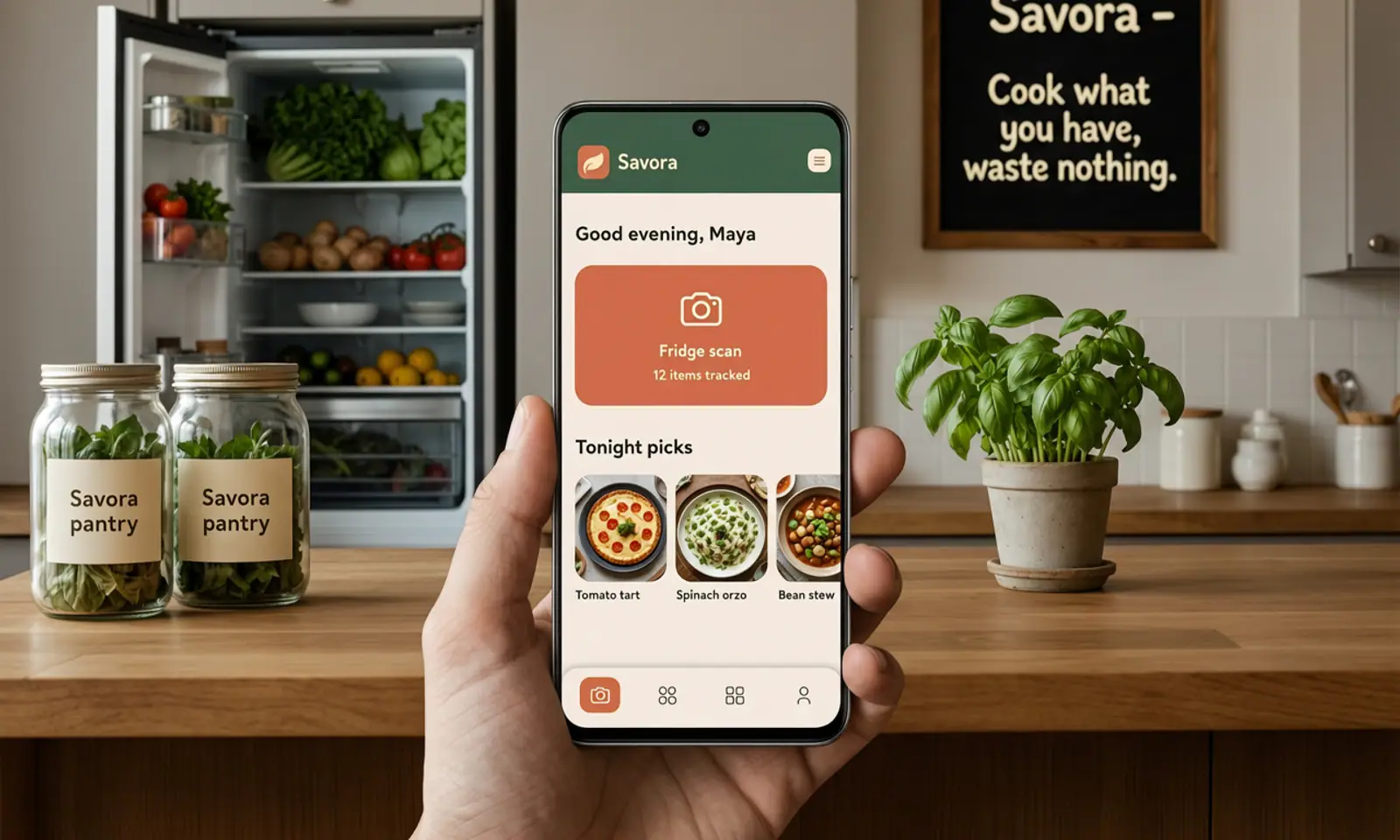
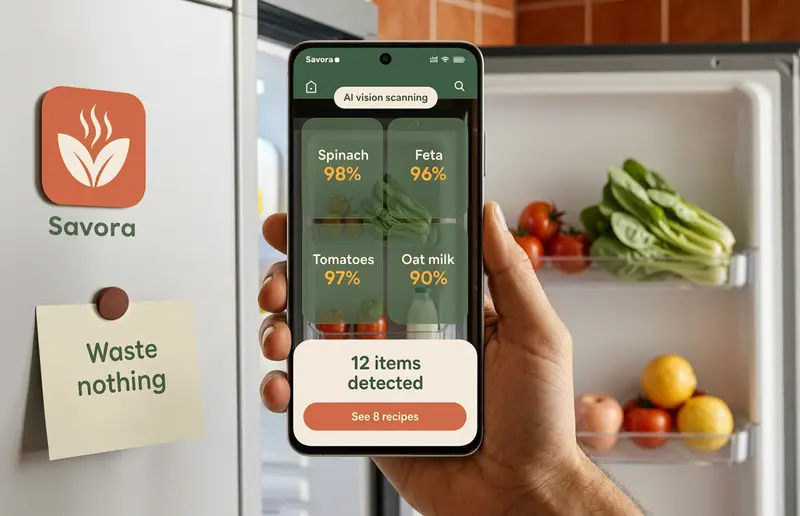
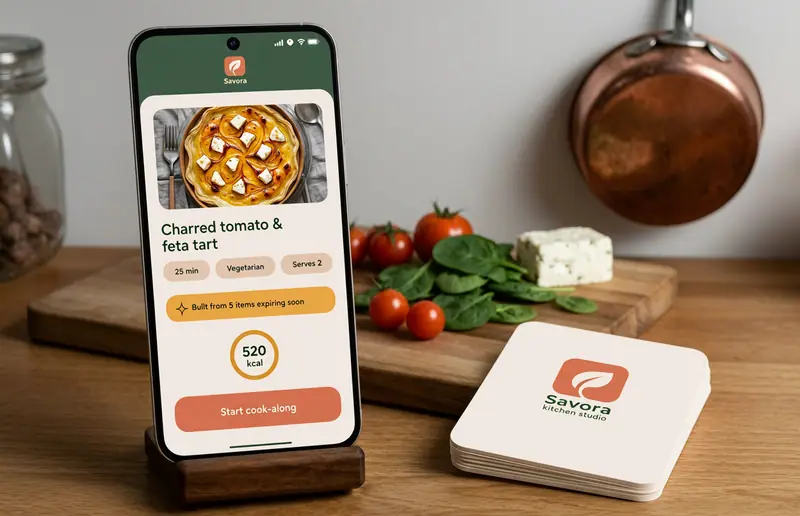
Six original Savora interface concepts, photographed in the kitchens they belong to. Inventory, recipes and results shown with illustrative demo data.
Challenge
Most recipe apps start from a database of dishes and ask shoppers to buy towards them, which is why ingredients die at the back of the fridge. A useful kitchen companion has to work in the opposite direction: read what exists, respect dietary constraints and time, and only then suggest what to cook or buy. That inversion makes computer vision, generation, sequencing and voice interaction one connected problem rather than four separate features, and it has to hold together on a small screen used with wet hands in a warm, bright, messy room.
- Recognize fridge and pantry contents from a single handheld photo
- Generate recipes from what exists instead of what a shop sells
- Rank suggestions by expiry date so nothing dies unused
- Keep cooking hands-free once the phone is down on the counter
- Turn a weekly plan into a grocery list that only fills gaps
Solution
Savora opens with a scan: one photo of the open fridge becomes a tracked inventory with confidence scores. The recipe studio then generates dishes from that inventory, explaining which expiring items each dish rescues and offering substitutions when something is missing. Cook-along takes over at the stove with large timers and a voice loop, while the pantry radar keeps a running use-it-first queue between sessions. The weekly plan closes the loop, laying seven days of meals over the household taste profile and diffing the plan against the tracked inventory to produce a gap-only grocery list synced to the store app. Flutter keeps iOS and Android parity, with FastAPI services, PostgreSQL and Redis behind the vision, generation and planning pipelines.
- Vision-powered fridge and pantry scan with per-item confidence
- Generative recipe studio grounded in the tracked inventory
- Expiry-aware ranking that surfaces what needs eating first
- Voice-first cook-along mode with step timers and prompts
- Weekly meal plan aligned to a household taste profile
- Gap-only grocery list synchronized to the store app
Results
6
Original
mobile screens4
AI capabilities
concepted25 min
Target time from
scan to table