Overview
Fossilium is a product design concept for natural history collections. Collection records must keep specimen imagery, storage references and descriptive observations together. The scope connects four activities: specimen record, drawer atlas, study comparison, exhibit selection. Each has a dedicated screen, with an editorial specimen viewer with provenance timeline and drawer navigation establishing the visual direction. The work includes interface composition, proposed feature architecture and industry-specific showcase imagery.
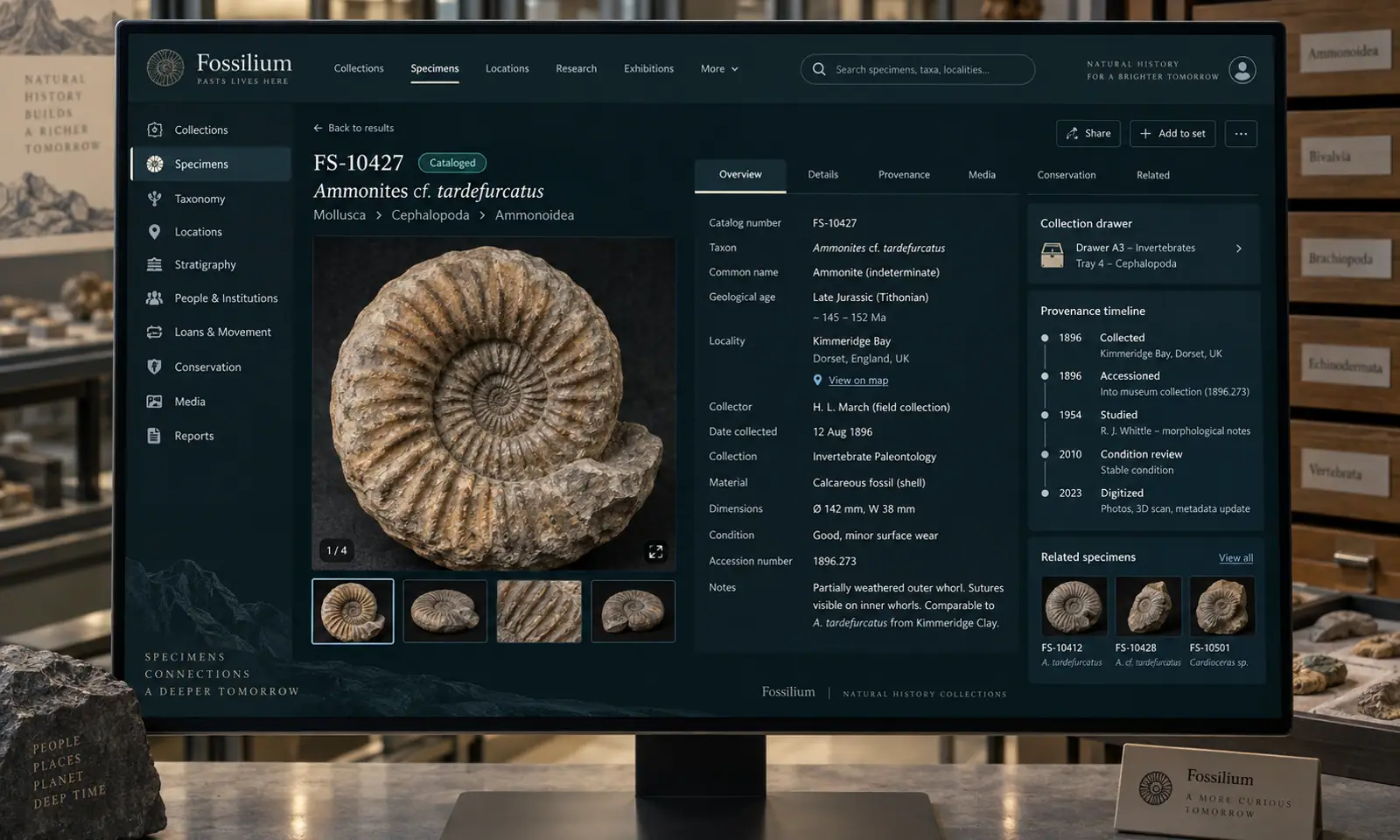
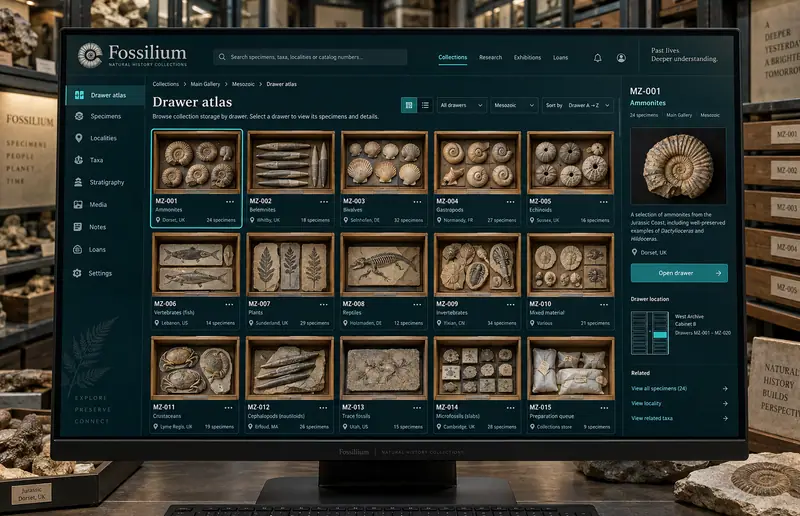
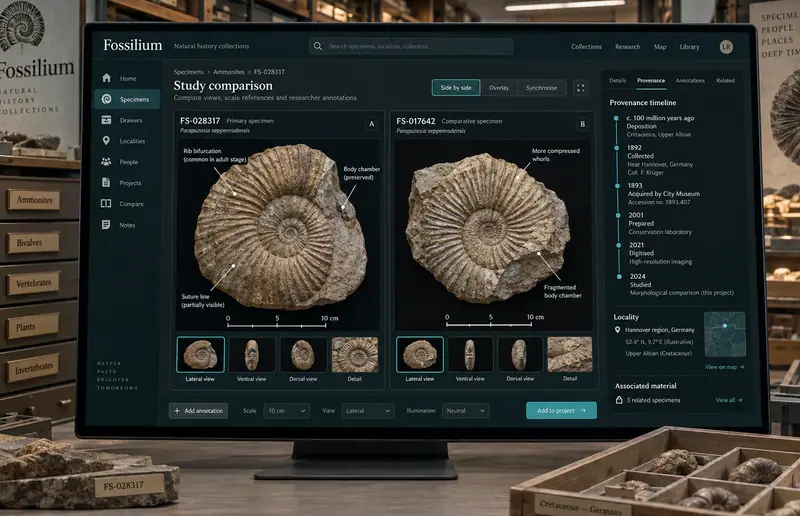
Four original natural history collections interface concepts. Records, technical values and depicted workflows are illustrative.
Challenge
Collection records must keep specimen imagery, storage references and descriptive observations together. A useful workspace must preserve the connection between the original reference, the selected record and the discussion around a change. Showing more information alone would not resolve that handoff.
- Keep specimen identifiers and storage locations connected to the selected work.
- Make documentation notes visible at the point where decisions are reviewed.
- Retain exhibit shortlists and label drafts through the handoff.
Solution
The design starts with an editorial specimen viewer with provenance timeline and drawer navigation. Inspect a fossil photograph with illustrative catalog fields and documentation notes. The remaining views separate exploration, coordination and review into layouts suited to their content. A sandstone, deep teal and charcoal palette gives the product its own visual identity, while selected-record panels keep details close to the working surface.
- Inspect a fossil photograph with illustrative catalog fields and documentation notes.
- Browse a visual storage-drawer grid with specimen thumbnails and location references.
- Compare specimen views with scale references and researcher annotations.
- Arrange candidate specimens on an exhibition shortlist with label drafts.
Results
4
Specialized
concept views12
Proposed
feature areas