Dockvera
SaaS Platform

Project Type
Concept Study
Industry
Logistics
Services
SaaS Product Design & Development

Overview

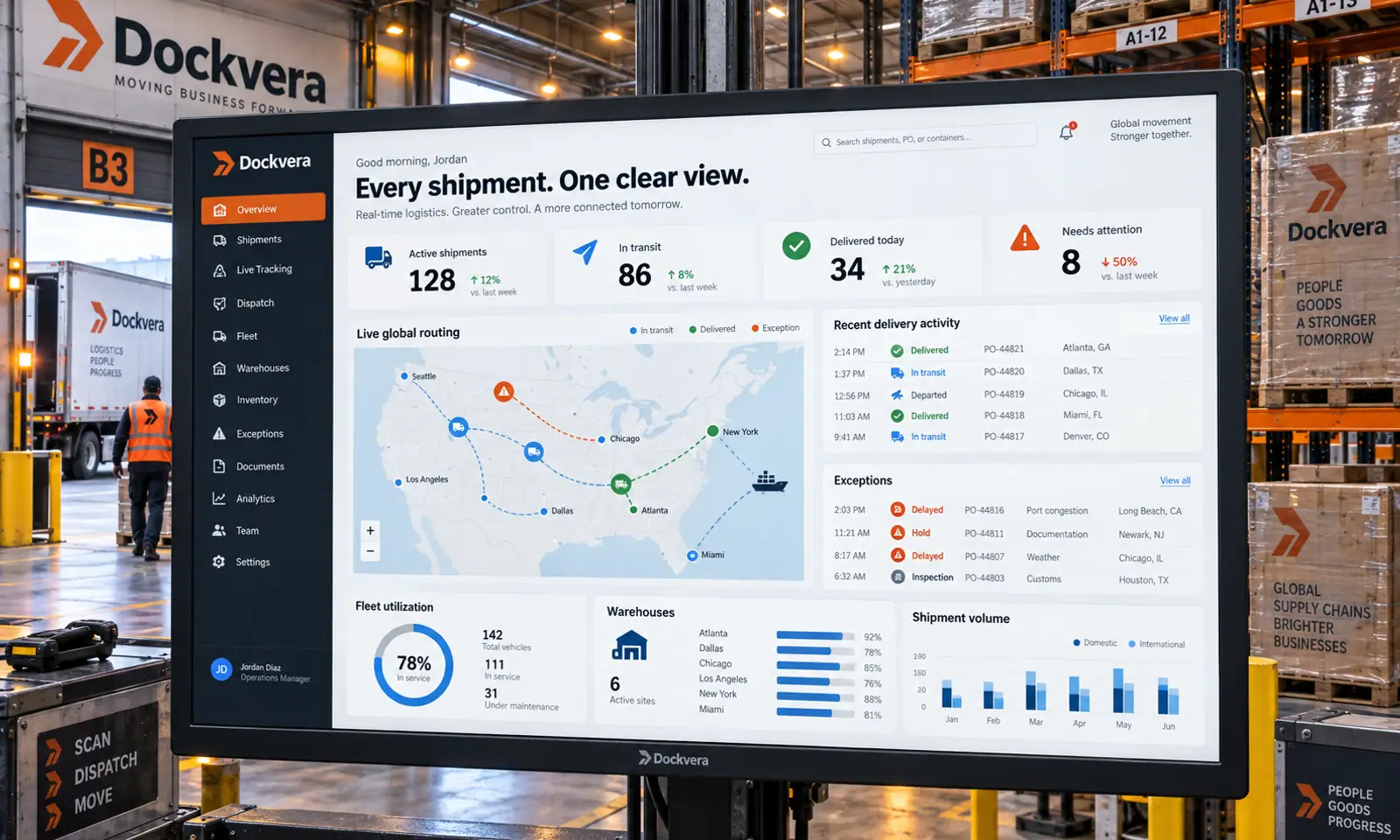
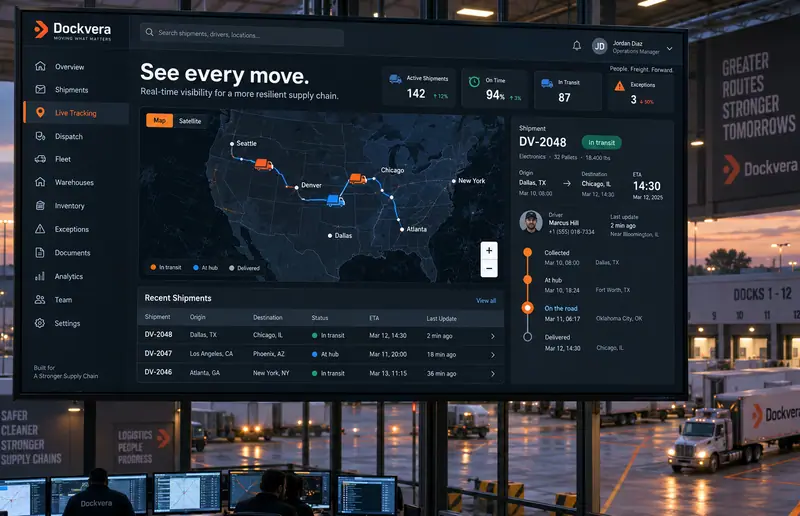
Dockvera explores a shared operating picture for logistics teams working across dispatch desks, loading bays and warehouse floors. The concept connects shipment status, route progress, vehicle assignments and fulfillment tasks through consistent navigation and clear status signals. Its design scope covers four detailed interface views, an operations-focused information architecture and a visual identity built around industrial environments. The central question is practical: what is moving, what is waiting and who needs to act?
Dockvera SaaS Platform hero

Logistics interface concepts in industry-specific environments. Shipment counts, routes and assignments are fictional.

Challenge

A shipment crosses several teams before reaching its destination. Dispatchers plan vehicle capacity, warehouse staff prepare goods and coordinators answer delivery questions. When each group works from a separate list, a delay or incomplete handoff can be difficult to locate. A useful workspace needs both an overall view and enough detail to identify the next action.

  • Shipment status and warehouse readiness can become disconnected during handoffs.
  • Dispatch teams need to compare available vehicles, drivers and unassigned stops.
  • Tracking screens must show update freshness alongside location and estimated arrival.
  • Urgent exceptions need a clear place among routine operational activity.

Solution

The proposed interface connects an overview to focused tracking, dispatch and warehouse workspaces. Shared shipment identifiers and status language preserve context between screens. The overview brings attention to exceptions, tracking explains a shipment's progress, dispatch organizes the next shift and warehouse panels surface floor activity by zone and task. Dense operational information is balanced with strong hierarchy and readable tables.

  • A common overview groups active shipments, recent deliveries and items needing attention.
  • Tracking pairs a route map with status history, an ETA and a last-update indicator.
  • A dispatch board makes vehicle assignments and remaining work visible together.
  • Warehouse views connect receiving, picking and packing queues to floor zones.
  • Twelve navigation destinations provide room for related workflows without crowding the main canvas.

Results

  • 4

    Designed
    operations views

  • 12

    Navigation
    destinations

Let’s CraftingVisual ImpactStart a Project

We Are Available For New Project

Dockvera
SaaS Platform

Project Type
Concept Study
Industry
Logistics
Services
SaaS Product Design & Development

Overview

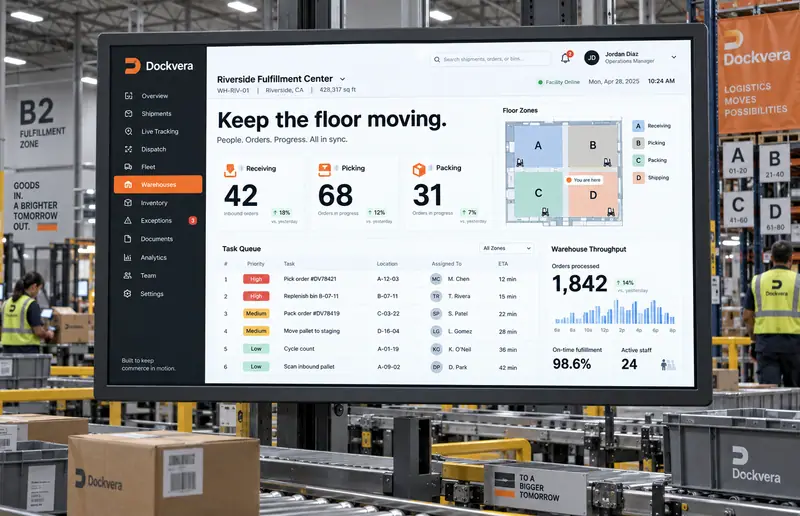
Dockvera explores a shared operating picture for logistics teams working across dispatch desks, loading bays and warehouse floors. The concept connects shipment status, route progress, vehicle assignments and fulfillment tasks through consistent navigation and clear status signals. Its design scope covers four detailed interface views, an operations-focused information architecture and a visual identity built around industrial environments. The central question is practical: what is moving, what is waiting and who needs to act?
Dockvera SaaS Platform — hero

Logistics interface concepts in industry-specific environments. Shipment counts, routes and assignments are fictional.

Challenge

A shipment crosses several teams before reaching its destination. Dispatchers plan vehicle capacity, warehouse staff prepare goods and coordinators answer delivery questions. When each group works from a separate list, a delay or incomplete handoff can be difficult to locate. A useful workspace needs both an overall view and enough detail to identify the next action.

  • Shipment status and warehouse readiness can become disconnected during handoffs.
  • Dispatch teams need to compare available vehicles, drivers and unassigned stops.
  • Tracking screens must show update freshness alongside location and estimated arrival.
  • Urgent exceptions need a clear place among routine operational activity.

Solution

The proposed interface connects an overview to focused tracking, dispatch and warehouse workspaces. Shared shipment identifiers and status language preserve context between screens. The overview brings attention to exceptions, tracking explains a shipment's progress, dispatch organizes the next shift and warehouse panels surface floor activity by zone and task. Dense operational information is balanced with strong hierarchy and readable tables.

  • A common overview groups active shipments, recent deliveries and items needing attention.
  • Tracking pairs a route map with status history, an ETA and a last-update indicator.
  • A dispatch board makes vehicle assignments and remaining work visible together.
  • Warehouse views connect receiving, picking and packing queues to floor zones.
  • Twelve navigation destinations provide room for related workflows without crowding the main canvas.

Results

  • 4

    Designed operations views

  • 12

    Navigation destinations

Let’s Crafting

Visual Impact

Start a Project